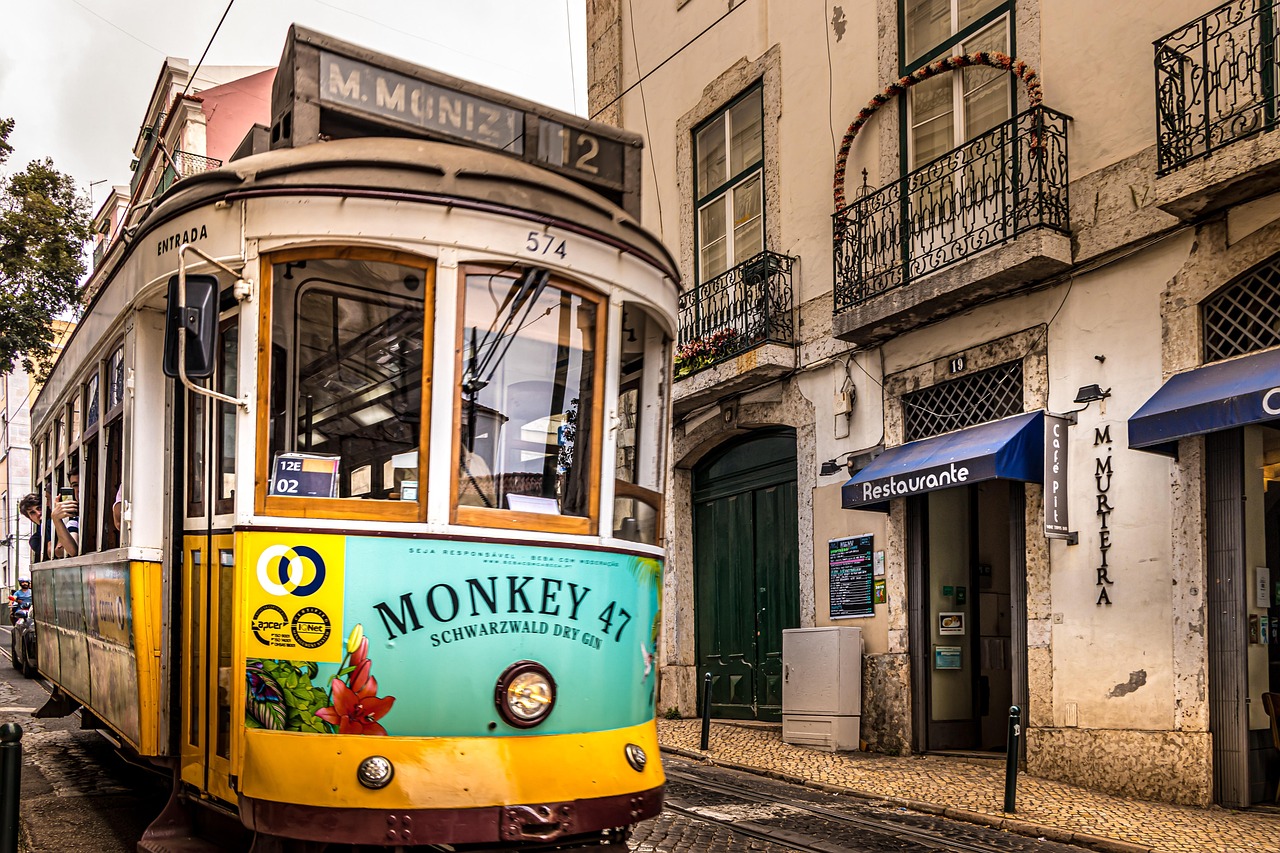
I want to be clear that this is not a comprehensive guide to Lisbon. I was there for three weeks in February, which is not peak season, which means the version of the city I saw was probably not the version most people see. That's partly why I'm writing this down.
What follows is organised by neighbourhood because that's the useful way to think about the city. Lisbon doesn't function as a unified place you navigate from a centre — it's a collection of neighbourhoods with different relationships to the idea of tourism, and understanding those relationships helps you decide where to spend time.
Alfama: complicated
The case against spending much time in Alfama is well made by the fact that it's impossible to walk ten metres without being photographed by someone photographing someone who is also a tourist. The tiles are real. The fado restaurants aimed at the person who found them on a list are not, in any meaningful sense, fado restaurants.
The case for Alfama is that it still has residents, and on Tuesday and Saturday mornings the Feira da Ladra runs along the slopes below — a flea market that is genuinely chaotic, genuinely cheap, and selling things that have been in someone's basement since 1987. That version of Alfama is worth an early morning.
Mouraria: the one with the actual neighbourhood feeling
Mouraria is where the city's older immigrant communities are, and where the fado tradition is actually from, in contrast to the performance of it in Alfama. It's less photographed, less pretty in the conventional sense, and considerably more interesting if you stay longer than fifteen minutes.
There's a square — Largo da Severa — where people sit on Tuesday evenings and sometimes someone plays. Not a performance. Just playing. The distinction matters.
The food options in Mouraria are better and cheaper than Alfama. This is directly related to the fact that the restaurants have regular customers who live there.
LX Factory and the Alcantara area
LX Factory gets a lot of traffic from design-conscious visitors and it deserves some of it. The Sunday market there is a better version of what markets often try to be — independent sellers, craft objects that are actually handmade, food that isn't just pastéis de nata repackaged as a lifestyle.
The surrounding area, Alcântara, is industrial in a way that's being converted slowly. Worth walking through, not worth staying in.
What I'd ignore
The central Baixa area is fine as a transit space. The Bairro Alto is good for one evening but becomes repetitive. The Chiado is where every design concept from 2015 has come to retire. The Time Out Market is a mall with better branding than most malls.
None of these are wrong to visit. They're just not the city.
What the notes actually say
I have three weeks of notes. The recurring things: go early. Walk further than the map suggests. Eat where the awning is faded. The coffee counter, not the terrace. The bakery with no English sign, not the one that translated its menu into four languages.
These are not rules. They're patterns I noticed. The city is large enough to have exceptions to all of them.