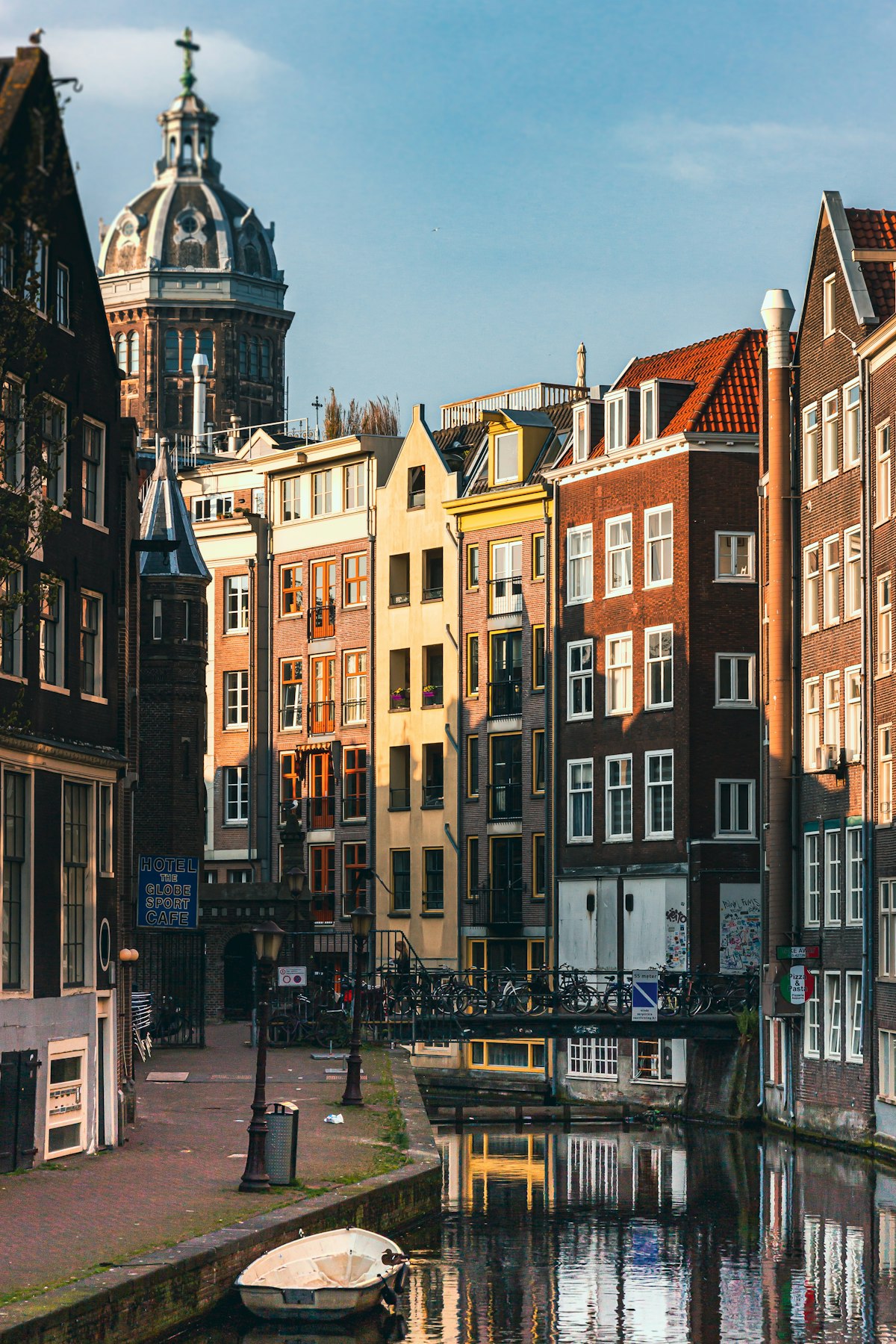
Most cities have a version of themselves they keep for tourists and a different one they use when no one's watching. Arnhem's morning version is the second kind.
I've been living here on and off for two years. The mornings are the thing I keep coming back to. Not because they're remarkable — they're not. Because they're genuinely unremarkable in a way that takes effort to maintain.
The first hour
Somewhere around seven, the light comes in at an angle through the window that makes the kitchen look briefly like a painting. This lasts about twenty minutes. After that, it's just light.
The street below is already moving — a man with a delivery crate, someone walking a dog at a clip that suggests they have somewhere to be — but not noisily. Arnhem has a kind of morning restraint that I associate with places where people actually live rather than places where people perform living.
Coffee first, obviously. There's a routine about this that I've given up trying to break. The kettle, the hand grinder, the ceramic cup with the crack in the handle that I keep meaning to replace but haven't. Four minutes. The ritual is the point, not the efficiency.
The bakery on Klarendalseweg
If you go early enough — before nine on weekdays, before nine-thirty on Saturdays — the bakery two streets over still has the bread that came out that morning. This sounds obvious but it's not. Most bakeries keep things warm long enough that you can't tell anymore.
The woman who usually runs the counter on Tuesdays knows the regulars by what they order. She doesn't make conversation exactly, but she notices things. That's different.
The bread is dark, a little sour, with a crust that doesn't survive the trip home in a paper bag. You should eat it there, standing, which is not what the small tables suggest but is clearly what the bread prefers.
What changes between 8 and 10
The neighbourhood has two temperatures. Before nine, it belongs to the people who live there. After ten, something shifts — not dramatically, but perceptibly. The cafes open for the second wave, the ones who came for the atmosphere rather than because it's the closest place to get coffee.
This is not a complaint. It's just an observation about timing. If you want to see Arnhem being itself rather than being observed, you need to be there early.
The market on Wednesday mornings on the Korenmarkt is the clearest example. By eleven it's browsable. At eight, it's functional. Different people, different pace, different transactions.
Walking without a destination
The thing about Arnhem that I didn't expect when I moved here is how navigable it is on foot in a way that has nothing to do with distances. The city is organized like someone thought about where people would actually want to walk, which is not how most places are organized.
The park by the Sonsbeek is the obvious example. Less obvious: the canal paths east of the centre, which feel like they were designed specifically for the kind of walking you do when you don't know what you're thinking about yet.
I don't have a recommendation here, exactly. The point is more that Arnhem rewards a particular kind of attention — slow, without an agenda — that's easier to bring in the morning before you have things to do.
That's the slow morning, really. Not a curated experience. Just the city being itself, which it does better before ten than after.